Strategic Analysis of Ammonium Sulfate: Production, Application, and Export Potential in the Iranian Chemical Mine
Executive Summary
The global agricultural and industrial landscape is currently witnessing a paradigm shift, driven by the intensifying need for sustainable soil management and the robust expansion of chemical manufacturing capabilities. Within this dynamic environment, Ammonium Sulfate—chemically designated as (NH_4)_2SO_4—has transcended its traditional role as a simple nitrogenous fertilizer to become a strategic commodity of critical importance.
For the Iranian chemical mining sector, this compound represents a convergence of geological advantage, industrial infrastructure, and geopolitical positioning. Iran, with its vast reserves of natural gas and sulfur, stands at the precipice of becoming a dominant hegemon in the regional supply of Ammonium Sulfate, particularly to key markets such as Turkey, Iraq, Afghanistan, and the broader Middle East.
This comprehensive report, commissioned for the Iran Chemical Mine platform, serves as a definitive operational and strategic guide. It is designed to function not only as a repository of technical specifications but as a roadmap for navigating the complexities of production, agronomic application, and international trade in 2025.
By synthesizing advanced chemical engineering principles with granular market intelligence, this analysis aims to position Iranian Ammonium Sulfate as the superior choice for global buyers.
1. The Chemical and Physical Architecture of Ammonium Sulfate
To understand the commercial and agronomic value of Ammonium Sulfate, one must first appreciate its fundamental chemical architecture. It is an inorganic salt that serves as a high-efficiency delivery vehicle for two of the most critical elements in plant biology and industrial chemistry: Nitrogen and Sulfur.
1.1 Molecular Composition and Stoichiometry
Ammonium Sulfate is composed of 21% nitrogen (N) and 24% sulfur (S) by weight. This stoichiometry is not merely a numerical value but the defining characteristic that dictates its behavior in soil and industrial solutions. The nitrogen is present entirely in the ammoniacal form (NH4), while the sulfur exists as the sulfate anion (SO4).
The significance of the ammoniacal form cannot be overstated. Unlike nitrate nitrogen (NO3), which is highly mobile and prone to leaching into groundwater—a significant environmental and economic loss—the ammonium cation (NH4) is positively charged. This charge allows it to be adsorbed onto the negatively charged clay and humus colloids in the soil, effectively “sticking” the nutrient in the root zone until the plant requires it or until soil bacteria convert it.
This retention mechanism makes Ammonium Sulfate a “slow-release” nitrogen source relative to nitrate-based fertilizers, providing a sustained nutrient supply that aligns closer to the physiological uptake curves of many crops.
Furthermore, the sulfate component (SO4) is the primary form of sulfur absorbed by plant roots. Unlike elemental sulfur, which must first be oxidized by soil bacteria over weeks or months to become plant-available, the sulfur in Ammonium Sulfate is immediately soluble and available for uptake.5 This makes it the rescue treatment of choice for acute sulfur deficiencies, which are becoming increasingly common due to the reduction in atmospheric sulfur deposition (acid rain) following stricter global industrial emission standards.
1.2 Physical Morphology and Commercial Grades
Ammonium Sulfate is produced in various physical forms, each tailored to specific end-use applications and logistical requirements. The distinction between these forms is a primary driver of price and market suitability.
1.2.1 Crystalline Ammonium Sulfate
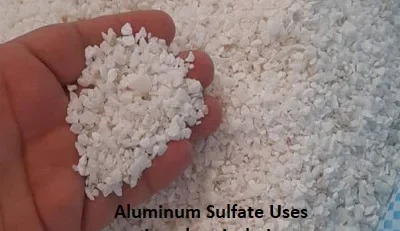
The crystalline form is often the direct result of the crystallization process in saturators. These crystals can vary in size and shape depending on the production method—ranging from fine “sugar-like” crystals to larger, more robust structures.
- Characteristics: High purity, often exceeding 99%. The color can range from pure white to off-white or slightly grey/yellow depending on organic impurities or iron content derived from the sulfuric acid source.
- Primary Utility: This form is highly soluble, making it excellent for dissolving in water tanks for fertigation (drip irrigation) systems. It is also the preferred form for industrial applications, such as in the textile or pharmaceutical industries, where rapid dissolution is required.
- Market Nuance: Crystalline material can be prone to “caking” or lumping if exposed to humidity. Iranian producers often treat these crystals with anti-caking agents to ensure free-flowing properties during transit to humid markets like the Caspian coast or southern Iraq.
1.2.2 Granular Ammonium Sulfate
Granular Ammonium Sulfate represents a value-added product where fine crystals are compacted or granulated, often with a binding agent, to form uniform spherical particles, typically 2-5 mm in diameter.
- Characteristics: These granules are robust, dust-free, and resistant to crushing. They possess a high hardness rating, which is essential for mechanical handling.
- Primary Utility: Granular AS is the gold standard for direct soil application in broad-acre farming. Its size uniformity allows it to be blended with other granular fertilizers like Diammonium Phosphate (DAP) or Urea without segregating in the hopper. This allows farmers to create custom N-P-S blends in the field.
- Export Demand: Markets like Turkey and Brazil heavily favor granular forms for use in mechanized spreaders, where particle trajectory and spread width must be consistent.
1.2.3 Powdered Ammonium Sulfate
This is the finest grade, often resembling flour.
- Primary Utility: While less common in direct agriculture due to wind drift issues, it is vital for niche industrial uses, such as the production of fire extinguisher powders, herbicide adjuvants, and bacterial fermentation media.
1.3 Thermodynamic Properties and Solubility
Ammonium Sulfate is highly soluble in water, a property that underpins its versatility. At $20^{\circ}C$, approximately 750-760 grams of the salt can dissolve in a liter of water.10 This high solubility is endothermic, meaning the solution cools down as the salt dissolves.
For Iranian farmers utilizing advanced irrigation systems in arid regions like Kerman or Yazd, this high solubility ensures that the fertilizer does not clog sensitive drip emitters or spray nozzles, a common plague with lower-quality fertilizers.
Furthermore, the compound has a high critical relative humidity (CRH) compared to other nitrogen sources like Ammonium Nitrate. However, at 30, it begins to absorb moisture from the atmosphere if humidity exceeds roughly 79%. This hygroscopic nature dictates strict storage protocols, especially in Iran’s humid southern ports like Bandar Abbas, to prevent the degradation of physical quality before export.
1.4 Comprehensive Technical Specification Sheet
The following table outlines the standard technical parameters for Iranian export-grade Ammonium Sulfate:
Table 1: Technical Specifications of Iranian Ammonium Sulfate
| Parameter | Specification | Test Method / Significance |
| Nitrogen (N) Content | 21% Minimum | Kjeldahl Method; determines fertilizer value. |
| Sulfur (S) Content | 24% Minimum | Gravimetric Method; critical for secondary nutrient supply. |
| Purity | 99% Minimum | Indicators of refining quality; pharmaceutical grade often requires >99.5%. |
| Moisture | 0.5% Maximum | Critical for preventing caking during ocean transit. |
| Free Acid ($H_2SO_4$) | 0.05% Maximum | High acid content can rot packaging bags and corrode machinery. |
| Iron (Fe) | 0.007% Maximum | Trace impurity; high iron causes discoloration (yellow/brown). |
| Heavy Metals (Pb, Cd, As) | < 0.005% | Essential for environmental compliance and REACH certification. |
| Water Insoluble Matter | 0.01% Maximum | Ensures suitability for drip irrigation and liquid formulations. |
| pH (0.1M Solution) | 5.0 – 6.0 | The acidic nature helps neutralize alkaline irrigation water. |
| Particle Size (Granular) | 2 – 5 mm (90% min) | Determines compatibility with mechanical spreaders. |
| Bulk Density | ~960 – 1050 kg/m³ | Important for calculating shipping volume and storage needs. |
| Appearance | White to Off-White | Visual indicator of purity. |
2. The Iranian Production Landscape: Industrial Sovereignty
Iran’s position as a global energy superpower translates directly into a formidable competitive advantage in the production of Ammonium Sulfate. The synthesis of this chemical relies heavily on two inputs: Ammonia and Sulfuric Acid. Iran is a leading global producer of both.
2.1 The Feedstock Advantage
- Ammonia (NH3): Produced via the Haber-Bosch process, ammonia manufacturing is energy-intensive, requiring vast amounts of natural gas both as a hydrogen source and fuel. Iran holds the world’s second-largest natural gas reserves. This access to abundant, low-cost feedstock allows Iranian petrochemical complexes to produce ammonia at a fraction of the cost incurred by European or East Asian competitors, who are exposed to volatile global gas markets.
2.2 Major Production Hubs and Methodologies
The Iranian Ammonium Sulfate landscape is diverse, characterized by state-owned giants and nimble private sector entities.
- Process: In the steel manufacturing process, coal is converted to coke in coke ovens. This process releases ammonia gas as a byproduct. To scrub this ammonia from the coke oven gas (which is used as fuel), the gas is passed through saturators containing sulfuric acid, producing Ammonium Sulfate.
- Product Nuance: This “coke-oven grade” AS may sometimes contain trace organic compounds or slightly different crystal structures compared to synthetic grades. It is often highly valued in specific agricultural sectors where these organic traces are believed to act as biostimulants.
2.2.4 Private Sector Manufacturers
Companies and various entities operate granulation plants. These facilities often purchase crystalline powder from petrochemical giants or import it from Central Asia (Uzbekistan) and process it into high-quality granules. This “finishing” industry adds significant value, tailoring particle size and hardness to the specific requirements of export customers in Turkey and Brazil.
2.3 Synthesis Technologies
Two primary chemical pathways are utilized in Iran:
- Direct Neutralization:2NH3 (gas) + H2SO4 (liquid) \rightarrow (NH4)2SO4 (solid) + Heat. This reaction is highly exothermic. The heat generated is often used to evaporate water from the solution, precipitating the crystals. This method yields the highest purity product and allows for precise control over crystal size. It is the dominant method in modern petrochemical plants.
- The Merseburg Process (Gypsum Route):CaSO4 \2H2O + (NH4)2CO3 \ (NH4)2SO4 + CaCO3 + 2HO. Historically used where sulfur was scarce but gypsum (calcium sulfate) was abundant. While less common today due to cheap sulfur availability, it remains a potential route for utilizing waste gypsum.
3. Agronomic Value: The Science of Soil Improvement
To market Ammonium Sulfate effectively, one must move beyond selling “fertilizer” and sell “soil solutions.” The agricultural soils of the Middle East—spanning Iran, Iraq, Turkey, and Afghanistan—share a common, debilitating characteristic: Alkalinity.
3.1 The Alkaline Soil Crisis
The vast majority of arable land in this region is calcareous, characterized by high concentrations of calcium carbonate (CaCO3) and a soil pH consistently above 7.5 or 8.0.
- The Consequence: In high pH environments, essential plant micronutrients—specifically Iron (Fe), Zinc (Zn), Manganese (Mn), and Copper (Cu)—react with hydroxide ions to form insoluble hydroxides and oxides. They precipitate out of the soil solution and become chemically “locked,” unavailable to plant roots. This leads to widespread micronutrient deficiencies, manifesting as chlorosis (yellowing leaves) and significantly reduced yields, even if the farmer is applying ample N-P-K fertilizers.
3.2 Ammonium Sulfate as a pH Correcting Agent
Ammonium Sulfate is chemically unique in its ability to combat this alkalinity. It is classified as a physiologically acidic fertilizer.
3.3 Comparative Agronomy: Urea vs. Ammonium Sulfate
Urea is the primary competitor to Ammonium Sulfate. It contains 46% nitrogen compared to AS’s 21%, making it cheaper per unit of nitrogen. However, in the context of Iranian and regional agriculture, Urea has significant drawbacks that AS overcomes.
Table 2: Comparative Analysis – Urea vs. Ammonium Sulfate
| Feature | Urea (CO(NH2)2) | Ammonium Sulfate ((NH4)2SO4) |
| Nitrogen Content | 46% (High) | 21% (Moderate) |
| Sulfur Content | 0% | 24% (High) |
| Reaction in Soil | Hydrolysis creates an initial alkaline spike (pH rise), risking ammonia toxicity to seedlings. | Acid-forming reaction immediately lowers pH, benefiting alkaline soils. |
| Volatilization | High Risk: In hot surface soils, up to 40% of N can be lost as ammonia gas. | Low Risk: Ammonium is stable and less prone to gaseous loss in typical conditions. |
| Micronutrient Interaction | Can induce chlorosis by temporarily raising pH and locking iron. | Solubilizes Iron, Zinc, and Manganese, preventing chlorosis. |
| Leaching | Rapid conversion to nitrate can lead to leaching losses. | Ammonium absorbs to soil colloids, resisting leaching. |
| Best Application | Bulk N for acidic/neutral soils; corn, wheat. | Alkaline soils, sulfur-hungry crops, orchards, high-value horticulture. |
Strategic Insight: Marketing Ammonium Sulfate requires shifting the conversation from “Price per Nitrogen Unit” to “Return on Investment.” While Urea is cheaper, the nitrogen efficiency of AS in alkaline soils is far higher. 1 kg of Nitrogen from AS often yields more crop than 1 kg of Nitrogen from Urea because it stays in the soil and helps the plant access other nutrients.
4. Crop-Specific Application Protocols
Different crops have distinct physiological requirements. The following detailed protocols demonstrate the specific value proposition of Ammonium Sulfate for key crops in the Iranian export portfolio.
4.1 Pistachios: The Green Gold
Pistachios are Iran’s premier agricultural export, but orchards suffer from salinity and alkalinity.
- The Challenge: High pH locks Zinc and Copper, leading to “blank” nuts (shells with no kernel) and non-split nuts (which have lower market value).
- The AS Solution: Research specifically on Iranian pistachio orchards confirms that replacing Urea with Ammonium Sulfate reduces the percentage of blank nuts and increases the percentage of split nuts.
- Mechanism: The sulfur content combats the negative effects of sodium in saline irrigation water, while the ammonium form promotes a vigorous vegetative flush in early spring.
- Dosage Recommendation: For mature trees, application is recommended in late winter (February/March) just before the trees wake from dormancy. Rates vary by tree age but typically range from 2-4 kg per tree, often split into two applications.
4.2 Saffron: The Red Gold
Grown primarily in the arid Khorasan province, Saffron is a low-input but high-value crop.
- The Challenge: Saffron fields are often depleted of organic matter and sulfur due to centuries of cultivation. High pH irrigation water further exacerbates nutrient lock-up.
- The AS Solution: Sulfur is a critical component of the volatile compounds (safranal, crocin) that give Saffron its aroma and color. Studies have shown that while Urea increases vegetative grass growth, Ammonium Sulfate is superior for increasing the weight and quality of the stigmas (the harvestable spice).
- Yield Data: Application of sulfur-containing fertilizers has been linked to distinct improvements in stigma length and color intensity, key metrics for export-grade saffron.
- Application: Best applied during the dormant phase in summer or very early autumn before the first irrigation (Baraab) to ensure nutrients are available for the flowering burst in October/November.2
4.3 Cereal Crops: Wheat, Barley, and Corn
- Wheat & Barley: These staples require sulfur to synthesize the amino acids cysteine and methionine, which form the “disulfide bonds” in gluten. Gluten strength determines the baking quality of wheat flour. Using AS results in higher protein wheat, commanding a premium price from millers.
- Dosage: 150-200 kg/ha applied at the tillering stage.
- Dosage: 150-200 kg/ha applied at the tillering stage.
- Corn (Maize): Corn is a “heavy feeder” of sulfur. A deficiency appears as yellow striping on young leaves. AS is the preferred starter fertilizer for corn in Turkey and Iraq because the sulfate is immediately available to the young roots, unlike elemental sulfur which is too slow.
4.4 High-Value Horticulture: Tomatoes and Citrus
- Tomatoes: Experiments show that AS application enhances fruit firmness and Vitamin C content compared to Urea. The sulfur contributes to the synthesis of flavor compounds.
- Citrus: Citrus trees are notoriously susceptible to Iron Chlorosis (yellowing) in calcareous soils. Regular fertigation with soluble crystalline Ammonium Sulfate keeps the root zone acidic, preventing this chlorosis and ensuring dark green, productive trees.
5. Industrial Applications: A Multi-Sector Commodity
While agriculture consumes the lion’s share, the industrial market for Ammonium Sulfate is a vital stabilizer for demand, particularly during the agricultural off-season.
5.1 Water Treatment and Purification
Ammonium Sulfate is increasingly used in municipal water treatment plants as a disinfection aid.
- Chloramination: When added to water containing chlorine, it reacts to form monochloramine. Unlike free chlorine, which dissipates quickly and can form carcinogenic disinfection byproducts (DBPs) like trihalomethanes, monochloramine is more stable. It remains active throughout the distribution pipe network, ensuring water safety right up to the tap.
- Market: This is a key growth area in developing infrastructure markets like Iraq and urban centers in Iran.
5.2 Leather Tanning Industry
The leather industry, prominent in Tabriz (Iran) and Turkey, utilizes AS in the “deliming” process.
- Mechanism: Hides are initially treated with lime (calcium hydroxide) to remove hair. This leaves the hide highly alkaline. Before tanning, the pH must be lowered. Ammonium Sulfate is the standard deliming agent because it gently buffers the pH down to ~8.0. Strong acids would damage the collagen fibers, but AS provides a controlled, gentle acidification that prepares the hide for enzymatic bating.
5.3 Flame Retardants and Fire Extinguishers
Ammonium Sulfate is a key ingredient in “ABC” dry chemical fire extinguishers.
- Mechanism: When heated by a fire, the compound decomposes, absorbing heat (endothermic) and releasing inert gases that smother the flame. It also promotes char formation on cellulosic materials (wood, paper), creating a barrier that prevents oxygen from reaching the fuel source.
5.4 Food and Pharmaceutical Additives
- Food: Food-grade AS is used as a dough conditioner in commercial baking. It provides nitrogen for yeast, promoting vigorous fermentation and better loaf rise. It is Generally Recognized As Safe (GRAS) by international food safety agencies.
- Pharma: In biotechnology, high-purity crystalline AS is used for the “salting out” of proteins. It precipitates proteins from solution during the purification of antibodies and enzymes, a critical step in vaccine and drug manufacturing.
6. Global Export Strategy: Markets and Logistics
For Iran Chemical Mine and its partners, the export market is the primary engine of growth. Iran’s geopolitical location offers unique access to high-demand markets.
6.1 Turkey: The Gateway to Europe
Turkey is an agricultural powerhouse and a massive consumer of fertilizers, importing over 2 million tons annually.1
- Target Regions: The Southeastern Anatolia Project (GAP) region requires massive inputs for cotton and corn. The Aegean region needs AS for olives and grapes.
- Market Dynamics: Turkish buyers are sophisticated. They demand high-quality granular product (2-5mm) compatible with modern spreaders. Price competition is fierce with Russian and Chinese suppliers, but Iran has a logistical edge.
- Logistics Routes:
- Bazargan Border (Road): The busiest crossing. Ideal for smaller, just-in-time shipments (25-ton trucks). Fast transit (2-4 days to destination) allows Iranian exporters to react quickly to spot price changes in Turkey.
- Razi Border (Rail): Connects the Iranian rail network to the Turkish Van-Kapikoy line. This is the most economical method for bulk contracts (500+ tons). However, gauge changing or bogie exchange at the border can cause delays.
- Sea Transport: From Bandar Abbas to Mersin or Izmir. Viable for very large volumes (10,000+ tons), but transit times are longer.
- Bazargan Border (Road): The busiest crossing. Ideal for smaller, just-in-time shipments (25-ton trucks). Fast transit (2-4 days to destination) allows Iranian exporters to react quickly to spot price changes in Turkey.
6.2 Iraq: The Reconstruction Market
Iraq’s agriculture is in a state of revival, but its domestic fertilizer production is crippled.
- Soil Profile: Iraqi soils are among the most saline in the world due to millennia of irrigation without drainage. Ammonium Sulfate is biologically preferred over Urea for salinity management.
- Logistics:
- Shalamcheh: Key crossing for Basra and the southern agricultural belt.
- Mehran: Direct access to Baghdad and the central Euphrates/Tigris farming regions.
- Parvizkhan/Bashmaq: Vital for the Kurdistan Region (KRG). The KRG market is distinct, often with higher purchasing power and better private sector organization.
- Payment: Due to banking sanctions, trade is often settled via authorized exchange houses (Sarafi) or in cash at the border. Building trust with local distributors is essential.
6.3 Afghanistan: A Vital Lifeline
With agriculture constituting 25% of GDP, Afghanistan is a consistent market, though lower volume than Turkey.
- Crops: Wheat, pomegranates, and opium poppies (illicit but a reality of fertilizer demand).
- Logistics: Dogharoon (for Herat) and Milak (for Nimroz/Kandahar). Trade is often barter-based or settled in Rials/Afghanis. The shared language facilitates deep business networks.1
6.4 The 2025 Compliance and Sanctions Landscape
Exporting from Iran requires navigating a complex web of sanctions.
- Dual-Use Concerns: While fertilizers are generally exempt under humanitarian/agricultural licenses, Ammonium Sulfate can technically be a precursor for energetic materials. Exporters must ensure End-User Certificates are crystal clear to avoid “dual-use” flags at borders.
- Financial Channels: Recent regulations in 2025 have tightened financial monitoring. Exporters must utilize legitimate “halal” financial pathways, often routing through third-party jurisdictions like UAE or utilizing humanitarian trade mechanisms.
- Product Classification: Correct HS Code usage (31022100) is non-negotiable. Misclassification can lead to seizure of cargo.
7. Logistics, Storage, and Safety Protocols
The physical movement of Ammonium Sulfate from an Iranian mine to a Turkish farm involves overcoming significant chemical challenges.
7.1 The Hygroscopicity Challenge (CRH)
Ammonium Sulfate has a Critical Relative Humidity (CRH) of approximately 79% at 0.
- Implication: If the air humidity exceeds 79%, the fertilizer will spontaneously absorb water from the air, turning into a wet sludge or hardening into a concrete-like block (“caking”) upon drying.
- The Bandar Abbas Risk: Southern Iranian ports are extremely humid in summer. Ammonium Sulfate stored there awaiting shipment MUST be in moisture-proof packaging. Bulk storage in open piles is a recipe for disaster.
7.2 Packaging Standards
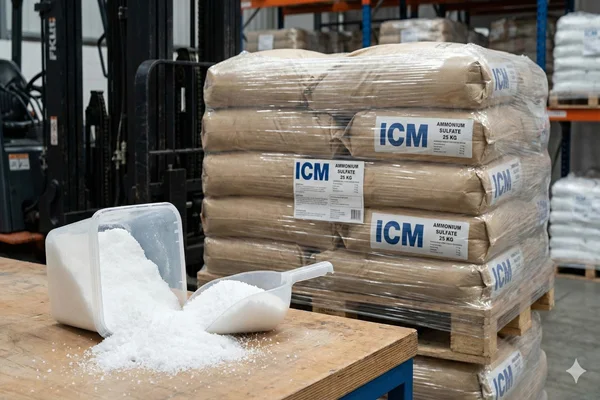
- Laminated Bags (25/50kg): The standard woven Polypropylene (PP) bag must have an inner Polyethylene (PE) liner or be laminated. This barrier is the only defense against humidity.
- Jumbo Bags (Big Bags): 1000kg to 1250kg capacity. These are preferred for large industrial buyers in Turkey. They must have a discharge spout and lifting loops. UV stabilization is required if they will be stored outdoors.
- Palletization: For export to Europe or high-end Turkish distributors, bags should be palletized and shrink-wrapped. This prevents moisture wicking from concrete floors and stabilizes the load during trucking.
7.3 Safety and Storage
- Fire Hazard: Ammonium Sulfate is non-flammable. However, if heated to decomposition (>280°C), it releases toxic fumes. Firefighters must use self-contained breathing apparatus.
- Incompatibilities: NEVER store Ammonium Sulfate near strong alkalis (Lime, Caustic Soda, Cement). The reaction releases ammonia gas, which is toxic and corrosive.
- Corrosion: The salt is corrosive to carbon steel, especially when wet. Storage bins and handling equipment should be made of stainless steel (304/316) or robust plastic (HDPE).
8. Commercial Guide: How to Buy and Partner
For international buyers landing on the Iran Chemical Mine website, the path to purchase should be transparent.
8.1 Ordering Checklist
Buyers should be prepared to provide:
- Grade Required: Crystalline (Industrial/Drip Irrigation) or Granular (Soil Application).
- Packing: 25kg, 50kg, or Jumbo.
- Destination: Determines the logistics route (Road vs. Sea).
- Inspection: Do you require SGS or Geochem inspection at the port of loading? (Highly recommended for first-time buyers).
8.2 Quality Assurance
Iran Chemical Mine guarantees product quality through rigorous testing. Every shipment is accompanied by a Certificate of Analysis (COA) detailing Nitrogen %, Sulfur %, Moisture, and Purity. We encourage buyers to request pre-shipment samples to verify solubility and particle size distribution.
9. Conclusion
The global fertilizer market is volatile, but the fundamentals of soil chemistry remain constant. Crops need Nitrogen and Sulfur; alkaline soils need acidification. Ammonium Sulfate provides both. For the regional market, Iranian Ammonium Sulfate is not merely a commodity—it is the most logical, agronomic, and economic choice.
With state-of-the-art production, a surplus of raw materials ensuring price stability, and a dedicated export infrastructure, Iran is set to be the premier supplier for the Middle East and Central Asia. Stakeholders who recognize the strategic value of this molecule—and the strategic advantage of sourcing it from Iran—will secure a robust foundation for their agricultural and industrial success in 2025 and beyond.