
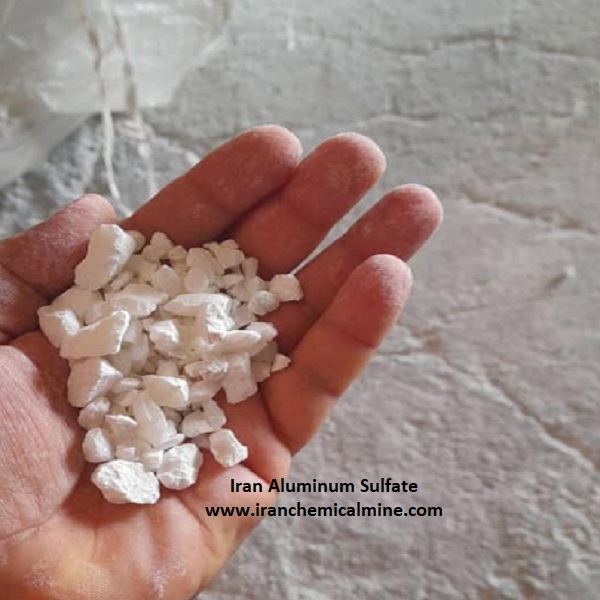
Iran Aluminum Sulfate
Iran Aluminum Sulfate, In fact is an industrial coagulant. This chemical compound is slightly soluble in alcohols, is non-flammable and non-volatile. This compound is known by other names such as 17% alum or in other words, 17% aluminum sulfate. Iran Aluminum sulfate is a chemical substance with the formula Al2(so4)3, which is considered the second most widely used aluminum compound after aluminum oxide.
This substance has the ability to retain and absorb water molecules (in the surrounding environment). Aluminum sulfate is a volatile and non-flammable substance, but it is acidic. When this substance is combined with water, it becomes acidic and its pH reaches close to 2. If this chemical compound comes into contact with the skin or metals, it causes metal corrosion and skin burns.
Therefore, it is recommended that you follow the necessary instructions for working with chemicals when working with this material. It is also recommended that you use corrosion-resistant polymer connections to store and transport this solution.
Production of Iran Aluminum Sulfate
There are various methods for producing this acidic substance, which are based on the reaction of aluminum-containing compounds with sulfuric acid. There are two common methods for producing this particular substance, which we will discuss in the following article:
First method:
Combining aluminum hydroxide with sulfuric acid produces this useful substance.
Second method:
In this method, this widely used chemical can be produced by heating aluminum, which is present in a sulfuric acid solution.
Aluminum Sulfate Uses
This chemical compound is widely used in various industries. Below we will discuss some of the uses of this chemical compound:
Drinking water and wastewater treatment industry
It is interesting to know that the main and at the same time the largest industrial application of this chemical is in the water treatment process. Since water treatment is considered as one of the most important and integral aspects of modern infrastructure, this functional material is used in this sector in a very large amount.
In this important process, aluminum sulfate causes the impurities in the water to stick together and also coagulate and turn into larger particles. These large particles easily settle at the bottom of the water treatment tank, or they will be separated from the water through a process called filtration.
Dyeing industry
Iran Aluminum Sulfate is used as a stabilizer in the dyeing industry. If this substance is dissolved in large quantities in slightly alkaline or neutral water, a gel-like precipitate of aluminum hydroxide will settle at the bottom of the container.
In the garment printing and dyeing industry, this gelatinous precipitate (by insolubilizing pigments) stabilizes the color of fabric fibers. As you know, stabilizers greatly help the printing process as well as printing on fabric and paper.
When this chemical compound is mixed with water, it produces a gel-like aluminum hydroxide and stabilizes the color of the fabric and stabilizes the color.
Iran Aluminum Sulfate in Agricultural industry
Iran Aluminum sulfate is sometimes used to lower the pH of agricultural and garden soil. Some greenhouse growers use this substance to change the color of hydrangeas and hydrangea flowers due to its acidic properties. The color of the flowers of these plants is affected by the pH of the soil.
Health and beauty industry
Iran Aluminum sulfate is actually known as aluminum alum. It is interesting to know that alums are disulfate salts that have the general formula AM(SO4)2.12HO2. In this general formula, A represents a monovalent cation such as ammonium and potassium.
M represents a trivalent ion such as aluminum. Due to the antibacterial properties of this particular chemical compound, it is used in the production of antiperspirants.
Other industries
In the construction industry, this substance is used as a concrete improver and a waterproofing agent. It is used in fire-fighting foams as a foaming agent. Aluminum potassium sulfate will be used in baking powders.
This acidic substance will be used to prevent algae growth in waterways, pools, etc. It is used in the pharmaceutical, soap-making, agricultural fertilizer, etc. industries.
Dangers and Storage Conditions
Inhaling this acidic substance causes shortness of breath and coughing. If aluminum sulfate comes into contact with the skin and eyes, it will cause pain, redness, itching and burning. Eating this substance will cause severe irritation in the intestines and stomach.
Sometimes a person who has swallowed this substance will experience nausea, diarrhea and vomiting. If water is added to aluminum sulfate, it will produce sulfuric acid. Due to its very acidic properties, this substance can cause chemical burns to the skin if it comes into contact with the skin.
Iran Aluminum Sulfate Safety
As mentioned above, this material has a low pH and the acid in it is slightly corrosive. For this reason, it is recommended that pipes, all fittings and containers that come into contact with this material are made of very resistant materials such as plastic, stainless steel, fiberglass, etc.
If aluminum sulfate comes into contact with the eyes and skin, wash the area of contact with the material with water.
If you inhale this material, leave the area as soon as possible and breathe fresh air.
If you swallow this chemical, immediately drink 1 glass of milk and try to induce vomiting.
If aluminum sulfate comes into contact with your skin, immediately remove contaminated clothing and wash the area of contact with the skin with lukewarm water. When working with this chemical compound, wear gloves, goggles and safety clothing.
Iran Aluminum Sulfate Storage Conditions
It is better to store Iran aluminum sulfate in double-walled packaging in a cool and dry environment so that it does not mix with other materials. Because all crystals lose their crystalline state when exposed to high pressure and temperature, which causes leaching from the product.
Because this material is moisture-absorbing, it is better to store powdered aluminum sulfate in a completely dry environment. Otherwise, it will cause all the powder grains to stick together and form lumps. When emptying aluminum sulfate storage containers, some of the material may remain in the container.
Therefore, after emptying this material from its storage containers, the entire container should be washed with water. If necessary, lime can be used to neutralize the remaining effect of this functional material.
