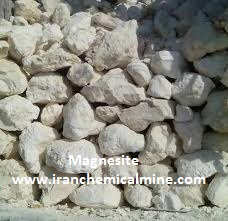
Magnesite applications
Magnesite applications in steel making
Magnesite is a mineral that plays a major role in the refractory industry. It is mainly consist of refractories, which are widely used in the refractory industry. Another part of magnesite aplications are used in agriculture, pharmacy, chemistry and so on. Nowadays, modern and developing steel needs to increase production of high quality magnesite refractories.
Highly calcined magnesite contains periclase crystals in a fine crystalline background with a melting point of 2800 ° C and a specific gravity of 3.6 g / cm3. To increase the heat resistance and stability of magnesite products, 5 to 12% alumina is added which results in the formation of a spinyl phase of MgO.
Magnesite applications storage,production and export destinations
The world’s definite reserves of magnesite are 2.5 and its base reserves are 3.4 billion tons. Worldwide production of magnesite is about 20 million tonnes, of which the largest share was in the newly independent countries of the Soviet Union, China, North Korea, the Czech Republic and Slovakia. The main producing countries of magnesite are Australia, Greece, Turkey, Spain, Brazil, Yugoslavia, India and Canada.
Magnesite export destinations vary according to its quality, magnesium oxide (MgO) content, and intended industrial applications. China, India, Japan, South Korea, Turkey, Germany, Italy, and other European countries are potential target markets for magnesite exports, driven by demand from the refractory, steelmaking, cement, chemical, and agricultural industries.
High-grade magnesite is widely used to produce magnesia (magnesium oxide) for refractory bricks and furnace linings in steel, glass, and cement manufacturing, making countries with large steel and industrial production sectors attractive markets.
The chemical industry uses magnesite-derived magnesium compounds in various industrial processes, while agricultural applications include soil conditioning and magnesium supplementation in fertilizers and animal feed, subject to product specifications and local regulations.
Natural magnesite is also used in certain construction materials and environmental applications, including wastewater treatment and the neutralization of acidic waste streams. For exporters, selecting the right destination requires evaluating MgO content, silica and iron oxide levels, particle size, calcination requirements, and applicable import standards.
By matching magnesite grades to the specific needs of international buyers, suppliers can identify competitive export opportunities and build long-term partnerships across the global magnesite and magnesium oxide market.