Casting Powder Production, Applications, and Global Market
In high-performance metallurgy, continuous casting stands as the backbone of modern steel production. However, achieving defect-free steel slabs, blooms, and billets requires more than just advanced machinery—it demands highly specialized consumables. Chief among these is casting powder.
As a vital lubricating and insulating agent, casting powder ensures the smooth transition of molten metal into solid forms. This article explores the production, applications, global export dynamics, and market trends of casting powder, highlighting the pivotal role played by Iran Chemical Mine as a premier global producer and supplier.
What is Casting Powder? (Other Names and Nomenclature)
While scientifically engineered for precise thermodynamic functions, this product is known by several names across different industrial sectors and geographic regions.
Alternative Industrial Names:
- Mold Powder (or Mould Powder)
- Casting Flux (or Mould Flux)
- Continuous Casting Powder (CCP)
- Scarfing and Slag Powder
Regardless of the name used, the primary objective remains identical: to control heat transfer, prevent oxidation, and provide critical lubrication between the solidifying steel shell and the water-cooled copper mold.
The Production Process: How Mold Powder is Manufactured
The production of casting powder requires precise chemical engineering. It is not merely a single mineral, but a carefully synthesized blend of natural and synthetic raw materials.
1. Raw Material Selection
The foundation of high-quality mold powder consists of three main groups of materials:
- Fluxing Minerals: Naturally occurring minerals such as fluorite (fluorspar), quartz, sodium carbonate, and various silicates like wollastonite.
- Carbon Sources: Graphite, coke, or carbon black are added to regulate the melting rate of the powder.
- Alumina and Magnesia Carriers: Used to adjust the final viscosity and melting point of the slag.
2. Blending and Homogenization
The selected minerals are crushed into fine powders and blended under strict quality control. The chemical ratios must be exact, as even a minor deviation can alter the viscosity, leading to disastrous “sticker breakouts” in steel mills.
3. Granulation (Form Factor)
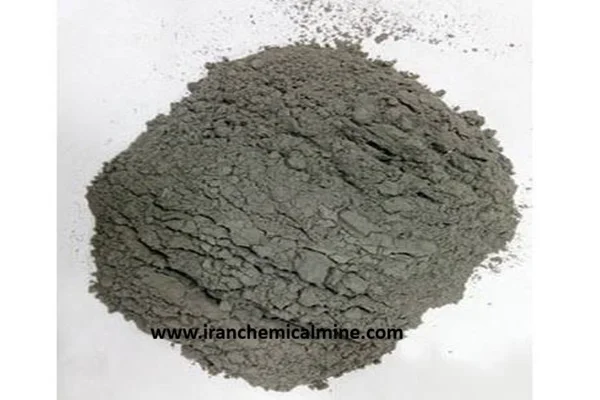
Modern steel plants heavily favor granulated mold powder over raw mechanical powder mixes. Granulation involves spray-drying the slurry to form uniform, dust-free micro-spheres. This reduces health hazards for operators, prevents pneumatic segregation during transport, and ensures a uniform melting layer on top of the liquid steel.
Critical Functions and Applications in Metallurgy
Casting powder serves five essential functions inside the continuous casting mold:
                  [ Fresh Casting Powder Layer ]
                     |---> Thermal Insulation
                     v
             [ Sintered / Semi-Melted Layer ]
                     |---> Controlled Carbon Release
                     v
               [ Liquid Slag Pool ]
                     |---> Inclusions Absorption & Oxidation Prevention
                     v
  ================== [ Mold Slag Film ] ==================
  (Copper Mold Wall) <-- Lubrication & Heat Transfer --> (Solidifying Steel Shell)
1. Friction Reduction and Lubrication
As molten steel forms a solidifying shell against the cold copper mold, it moves downward rapidly. The melted casting powder turns into a liquid slag film that infiltrates the gap, acting as a high-temperature lubricant to prevent the steel from sticking to the copper.
2. Controlled Thermal Heat Transfer
If molten steel cools too quickly or unevenly, cracks form on its surface. The slag film created by the mold powder acts as a thermal barrier, regulating horizontal heat transfer and ensuring uniform shell solidification.
3. Protection Against Atmospheric Oxidation
Liquid steel has an aggressive affinity for oxygen. A continuous layer of casting powder floating on top of the liquid steel meniscus completely seals it off from ambient air, preventing re-oxidation and nitrogen pickup.
4. Absorption of Non-Metallic Inclusions
As the steel flows, microscopic impurities (such as alumina inclusions) float up to the surface. A well-formulated casting flux acts as a chemical sink, dissolving these inclusions into the slag pool to ensure ultra-clean steel.
Casting Powder Technical Specifications
Different casting speeds and steel grades require distinct powder properties. Below is a standard property matrix for high-performing casting powders supplied by Iran Chemical Mine.
| Parameter / Property | Low-Speed Casting (Slabs) | High-Speed Casting (Billets/Blooms) | Peritectic Steel Grades |
|---|---|---|---|
| Melting Point (°C) | 1050−1120 | 1150−1220 | 1180−1250 |
| Viscosity at 1300°C (Pa·s) | 0.20−0.40 | 0.10−0.25 | 0.45−0.70 |
| Basicity (CaO/SiO2) | 0.90−1.10 | 0.80−1.00 | 1.15−1.35 |
| Free Carbon Content (%) | 4.0−7.0 | 2.5−5.0 | 5.0−8.0 |
| Bulk Density (g/cm3) | 0.75−0.85 | 0.80−0.90 | 0.70−0.80 |
| Primary Application | Heavy plate, automotive sheets | Rebars, structural profiles | High-crack-sensitive steels |
Global Market Analysis and Export Dynamics
The global mold powder and casting fluxes market is expanding steadily, projected to grow from USD 0.9 billion to USD 1.5 billion over the next decade, registering a stable compound annual growth rate (CAGR) of 4.1%.
Driving Forces of the Global Market
The primary catalyst for this market is the surge in global steel production, heavily driven by infrastructure modernization, automotive lightweighting, and renewable energy grids. As steel mills transition to automated casting setups, the demand for customized, application-specific granulated powders has spiked significantly.
Key Importing Regions
- Asia-Pacific: China, India, and South Korea represent the largest regional casting volumes.
- The Middle East & North Africa (MENA): Rapid industrialization in the GCC countries and structural expansions across North Africa have turned the region into an import hotspot for premium metallurgical consumables.
- Europe: Focused heavily on high-purity, environmentally friendly (low-fluorine) formulations for specialized engineering steels.
Iran Chemical Mine: A Trusted Producer & Global Supplier
When sourcing industrial-grade minerals and chemical consumables, supply chain reliability and chemical precision are paramount. Iran Chemical Mine stands at the forefront of the Middle Eastern metallurgical supply sector as an elite producer and exporter of premium casting powder.
Why Partner with Iran Chemical Mine?
- Abundant, High-Grade Raw Materials: Leveraging localized access to pure mineral deposits allows Iran Chemical Mine to offer highly cost-competitive products without compromising on foundational chemical purity.
- Tailored Formulations: Every continuous casting machine has a unique fingerprint dictated by its casting speed, mold oscillation frequency, and steel chemistry. Iran Chemical Mine engineers customized casting fluxes tailored to your specific plant parameters.
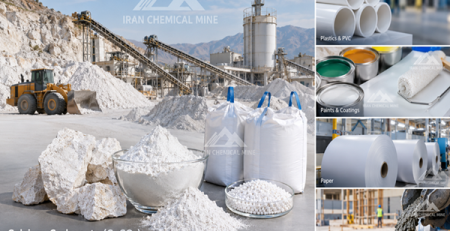
- State-of-the-Art Granulation: Utilizing advanced spray-drying technology, our granulated mold powders offer excellent flowability, zero dust pollution, and uniform melting rates across high-tonnage runs.
- Robust Export Infrastructure: With streamlined logistics and strategic trade positioning, Iran Chemical Mine successfully ships bulk and containerized casting powders to major steel hubs worldwide, guaranteeing timely deliveries and secure packaging.
Conclusion
Casting powder may seem like a minor additive in the grand scale of a steel mill, but it dictates the surface quality, yield, and operational safety of the entire continuous casting process. Partnering with an expert producer ensures minimal downtime and superior steel quality.
For inquiries regarding tailored chemical specifications, volume pricing, and export documentation, visit the official Iran Chemical Mine portal or contact our technical sales team directly.