Hydrated Lime in Leather Industry
The leather tanning industry relies heavily on specialized industrial chemicals to transform raw, perishable animal hides into durable, high-quality leather goods. Among these crucial chemical agents, hydrated lime chemically known as calcium hydroxide Ca(OH2) serves as an indispensable foundation during early-stage hide preparation.
Without precise alkaline treatment during the beamhouse operations, achieving uniform softness, flexibility, and collagen structure in finished leather would be impossible.
1. What is Hydrated Lime in Leather Manufacturing?
Hydrated lime is a dry, white powder produced by slaking quicklime (calcium oxide) with water under controlled industrial conditions:
CaO + H2O = Ca(OH)2
In leather production, high-purity hydrated lime acts as a controlled alkali agent. Its primary function is to elevate the pH level of hide soaking baths to approximately 12.0 to 12.5, creating an environment where non-collagenous proteins break down while hide fibers swell safely.
Key Types of Lime Used in Tanning
Not all lime products perform equally inside a tannery drum. Choosing the right form is critical for process consistency:
- Hydrated Lime Ca(OH)2: The industry standard. Highly stable, easy to dose evenly, and safe to store without risking exothermic (heat-releasing) reactions in damp environments.
- Quicklime CaO: Sometimes purchased to slake on-site. However, it presents thermal hazards during slaking and requires specialized handling equipment.
- Dolomitic Lime: Contains significant magnesium oxide (MgO). Generally avoided in high-grade leather production because magnesium raises pH less effectively and can leave harsh mineral residues on delicate hide grains.
2. Key Applications of Hydrated Lime in the Tannery
Hydrated lime is utilized extensively across initial hide preparation steps, collectively known as beamhouse operations.
Raw Hide Prep ──> Liming & Unhairing ──> Fiber Swelling ──> Fleshing & Bating ──> Tanning
                         │
                         └── Hydrated Lime Ca(OH)₂ Applied Here
Unhairing and Hair Dissolution
When combined with sodium sulfide (Na2S) or sodium hydrosulfide (NaHS), hydrated lime breaks down keratin proteins found in hair roots and epidermis. This allows tanners to quickly strip hair from hides without damaging the underlying collagen matrix.
Collagen Fiber Swelling and Structure Opening
At pH levels above 12, hide collagen absorbs water and swells significantly. This controlled physical swelling opens up tight fiber bundles, allowing subsequent tanning materials (such as chromium salts or vegetable tannins) to penetrate deeply and uniformly.
Saponification of Natural Fats
Raw hides contain natural animal fats and grease that cause blotches if left unchecked. Hydrated lime converts these fats into soluble soaps through saponification, making them easy to wash out before tanning.
Tannery Wastewater Treatment
Beyond processing hides, tanneries use hydrated lime to neutralize acidic wastewater streams, adjust pH for heavy-metal precipitation (such as trivalent chromium recovery), and clarify effluent prior to discharge.
3. Comparison: Hydrated Lime vs. Alternative Alkaline Agents
Tanneries often evaluate hydrated lime against other alkaline chemicals like sodium hydroxide (caustic soda) or sodium carbonate (soda ash).
| Property / Feature | Hydrated Lime Ca(OH)2 | Caustic Soda (NaOH) | Soda Ash (Na2CO3) |
| Maximum pH Buffer | Self-limiting (~12.5) | Uncapped (>14.0) | Moderate (~11.0) |
| Risk of Hide Damage | Very Low (Buffers naturally) | High (Risk of caustic burning) | Minimal (Too mild for full swelling) |
| Fiber Swelling Control | Plump, uniform, reversible | Harsh, aggressive swelling | Incomplete fiber separation |
| Cost Efficiency | High / Economical | Moderate to High | High |
| Effluent Sludge Neutralization | Excellent (Acts as coagulant) | Poor | Fair |
Key Takeaway: Hydrated lime’s self-buffering action at pH 12.5 prevents accidental over-alkalinization, safeguarding expensive hides from chemical burn—a safety margin caustic soda cannot match.
4. Key Benefits of Using High-Purity Hydrated Lime
Using premium-grade hydrated lime with low impurities yields tangible operational advantages:
- Consistent Leather Grain: Uniform alkalinity ensures smooth grain surfaces free of harsh wrinkles or lime blasts.
- Enhanced Leather Yield: Proper fiber swelling maximizes area yield per hide.
- Reduced Chemical Consumption: High Ca(OH)2 purity (90%+) reduces total chemical volume required per batch.
- Lower Iron Content (<0.05%): Minimizes dark staining on white or pale-dyed leathers.
5. Global Export Destinations & Sourcing from Iran Chemical Mine
Iran sits on vast reserves of high-grade calcium carbonate deposits, making it a major exporter of industrial lime products. Iran Chemical Mine manufactures and exports high-purity hydrated lime tailored to strict international tanning standards.
Major Export Destinations
Iran Chemical Mine supplies hydrated lime to key leather processing and manufacturing hubs across:
- Central Asia & CIS Region: Uzbekistan, Kazakhstan, Turkmenistan
- Middle East & Levant: Iraq, Turkey, UAE, Oman
- South Asia: Pakistan, India, Bangladesh
- Southeast Asia & East Europe: Vietnam, Russia, Belarus
Why Partner with Iran Chemical Mine?
As a direct supply partner for industrial chemicals and minerals, Iran Chemical Mine provides:
- Guaranteed Chemical Purity: High available lime content (Ca(OH)2 90%) with ultra-low iron and heavy metal levels.
- Customized Mesh Sizes: Fine micronized powders ensuring rapid solubility in tannery drums.
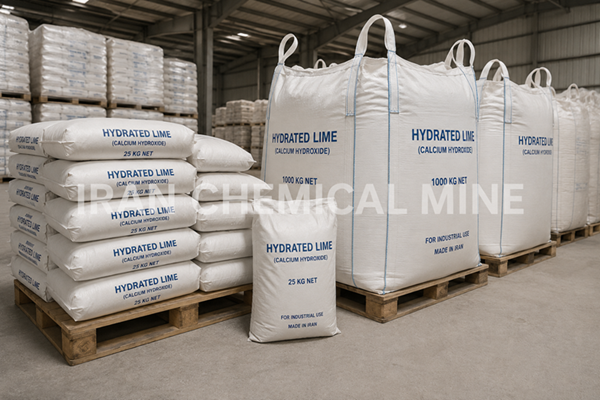
- Flexible Export Packaging: Available in 25 kg PP bags, 50 kg bags, or customized 1-ton Jumbo bags with inner moisture barriers.
- Reliable Logistics: Streamlined export documentation and shipping across land and sea routes.
6. How to Select the Right Grade for Your Tannery
When ordering hydrated lime for leather applications, verify the following specifications:
Technical Specifications Checklist
- Available Ca(OH)2 Content: Minimum 90%
- Iron Oxide (Fe2O3): Less than 0.05% (to avoid hide staining)
- Mesh Size: 200 to 325 mesh (ensures quick dispersion)
- Silica & Insoluble Matter: Less than 1.0% (prevents abrasive wear on drums)
Elevate Your Tannery Production with Iran Chemical Mine
Whether processing heavy bovine hides for footwear or soft caprine skins for garments, high-purity hydrated lime is essential for consistent quality.
Contact Iran Chemical Mine today to request technical data sheets, sample batches, or direct export quotes for your regional market.