Microcrystalline Wax Production, Applications, and Global Export Supply
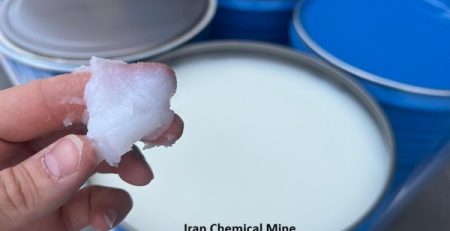
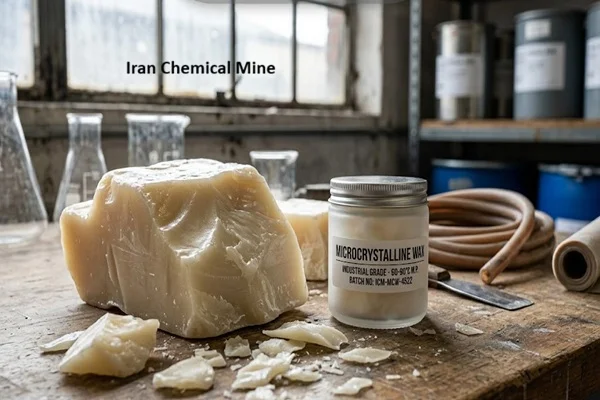
Microcrystalline wax is a highly specialized petroleum-derived product renowned for its unique structural characteristics and versatile applications across multiple industries. Unlike standard petroleum waxes, this material features significantly finer crystals, giving it exceptional flexibility, higher viscosity, and a higher melting point.
As global demand for high-quality polymer additives, cosmetic bases, and protective coatings increases, understanding the production and characteristics of this material becomes essential for industrial procurement. Iran Chemical Mine stands out as a premier global supplier and exporter, delivering top-tier wax products tailored to precise industrial specifications.
What is Microcrystalline Wax? (Other Names and Chemical Structure)
Understanding the Identity of the Wax
Microcrystalline wax—often referred to in technical sectors as Micro Wax, Petroleum Ceresin, or Hydrocarbon Wax—is a refined mixture of solid, saturated hydrocarbons. While it shares some roots with other mineral waxes like Ozokerite or Ceresin, commercial micro wax is uniquely separated from the heavy distillates and residual fractions of petroleum refining.
Chemical Composition and Structure
From a molecular standpoint, microcrystalline waxes consist primarily of highly branched iso-paraffins (isoparaffinic hydrocarbons) and naphthenic (cyclo-paraffins) hydrocarbons, with smaller fractions of linear n-paraffins. The carbon chain lengths are remarkably long, typically ranging from 34 to 70 c.
This complex, branched matrix prevents the molecules from packing tightly together. Consequently, the micro-level crystalline structure lacks the distinct geometric planes found in macrocrystalline waxes, resulting in a more cohesive, amorphous, and malleable material.
How Microcrystalline Wax is Produced
The manufacturing process of micro crystalline wax is intricate, demanding precise fractional distillation and refining technologies to isolate the desired hydrocarbon structures.
1. Vacuum Distillation and Residual De-asphalting
The production journey begins with the crude oil refining process. While ordinary paraffin waxes are extracted from light lubricating oil distillates, microcrystalline waxes are derived from the vacuum tower bottoms—specifically from heavy lube distillates and residual oils known as bright stock.
2. Solvent Dewaxing and Deoiling
The residual fraction undergoes a solvent de-asphalting process followed by solvent dewaxing. In this stage, a mixture of petrolatum (a semi-solid combination of liquid oil and solid wax) is separated. To remove excess oil, the petrolatum is subjected to fractional crystallization and a rigorous solvent deoiling process, reducing the oil content to target industrial specifications.
3. Hydrofinishing and Purification
The crude or “slack” micro wax contains trace amounts of sulfur, heavy aromatics, and nitrogen complexes that can degrade its quality and color. To eliminate these impurities, the material undergoes a high-pressure hydrofinishing (hydrotreating) process over a specialized catalyst at elevated temperatures. This step purifies the wax, transforming it into a highly stable, odorless, and color-refined product suitable even for sensitive cosmetic and pharmaceutical grades.
Key Properties of Microcrystalline Wax
The functional superiority of micro wax stems directly from its distinctive physical and chemical parameters:
- High Melting Point: Typically ranges between 60°C and 90°C, ensuring excellent structural integrity at elevated temperatures.
- Superb Flexibility and Adhesion: Because of its branched isoparaffinic nature, it is highly ductile, tacky, and non-fragile at low temperatures.
- Excellent Water and Oil Barrier: It forms a highly uniform, hydrophobic barrier layer that resists moisture and grease penetration.
- High Viscosity: Exhibits a much higher molten viscosity compared to alternative mineral or synthetic waxes.
Technical Comparison: Microcrystalline Wax vs. Competitor Raw Materials
To choose the right raw material for your manufacturing pipeline, it is helpful to compare microcrystalline wax against common alternatives like paraffin wax and synthetic polyethylene (PE) wax:
| Characteristic | Microcrystalline Wax (Micro Wax) | Paraffin Wax | Synthetic PE Wax |
| Crystal Structure | Microcrystalline (Finer, Amorphous) | Macrocrystalline (Large Crystals) | Polymeric / Crystalline |
| Hydrocarbon Type | Branched Iso-paraffins & Naphthenes | Straight-chain n-paraffins | Linear Ethylene Polymers |
| Melting Point Range | 60°C – 90°C | 48°C – 65°C | 100°C – 140°C |
| Texture & Flexibility | Ductile, Malleable, Tacky | Hard, Brittle, Friable | Very Hard, Smooth |
| Molecular Weight | High (580 to 800 Da) | Moderate (360 to 420 Da) | High to Very High (1,000+ Da) |
| Adhesive Strength | Excellent | Poor | Moderate |
Industrial Applications of Microcrystalline Wax
Thanks to its flexible and non-porous structure, this material serves as an indispensable component across various industries:
Cosmetics and Personal Care
In cosmetics, microcrystalline wax is highly utilized in lipsticks, eyeliners, lip balms, and skin creams. It functions as a binding agent, viscosity modifier, and emollient, giving stick products structural strength while remaining flexible enough to glide smoothly onto the skin.
Food Packaging and Coatings
Due to its non-toxic nature, refined microcrystalline wax emulsions are frequently coated onto paperboard, wrappers, and fruit surfaces. It fills the porous gaps in cellulosic fibers, dramatically reducing water vapor transmission rates (WVTR) and acting as a sustainable barrier against grease and moisture.
Rubber, Plastics, and Additive Blends
In the rubber and tire manufacturing industries, it acts as an anti-ozonant protection agent. It slowly migrates to the surface of the cured rubber, forming a protective film that shields the product from atmospheric ozone cracking. Additionally, it is frequently blended into cheaper paraffin waxes to adjust their flexibility and prevent brittleness.
Adhesives and Hot-Melt Formulations
Its natural tackiness and high viscosity make it a core ingredient in hot-melt adhesive formulations, ensuring robust bonding performance across fluctuating temperatures.
Global Export Destinations
As an essential industrial raw material, microcrystalline wax is exported extensively around the world. The primary import markets driving global demand include:
- Asia-Pacific: China, India, South Korea, and Vietnam (predominantly for rubber processing, plastics, and packaging manufacturing).
- Europe: Germany, Italy, Poland, and Turkey (driven by high-end cosmetics, automotive coatings, and adhesive manufacturing).
- Middle East & Africa: UAE, Oman, and South Africa (utilizing the material in construction chemicals, packaging, and personal care products).
Iran Chemical Mine: Your Trusted Supplier and Exporter
When sourcing premium raw materials, supply chain consistency and adherence to strict quality control parameters are critical. Iran Chemical Mine is a premier manufacturer, supplier, and exporter of high-grade microcrystalline wax.
Leveraging access to top-tier petroleum feedstocks and advanced refinery technologies, Iran Chemical Mine offers a diverse portfolio of micro waxes, ranging from industrial grades to highly refined, low-oil-content varieties.
Why Choose Iran Chemical Mine?
- Custom Specifications: Tailored melting points, needle penetration values, and oil content percentages to meet your exact industrial needs.
- Rigorous Quality Control: Every batch undergoes strict testing to guarantee excellent purity, color stability, and performance.
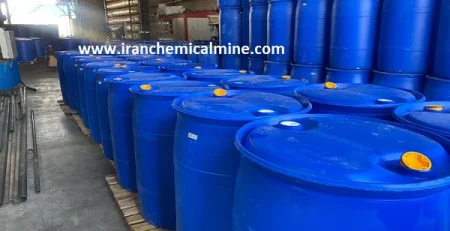
- Robust Export Infrastructure: Expert logistical handling ensures seamless, cost-effective, and timely cross-border delivery to major international ports.
Contact Iran Chemical Mine today to request technical datasheets, pricing quotes, or sample batches for your production pipeline.