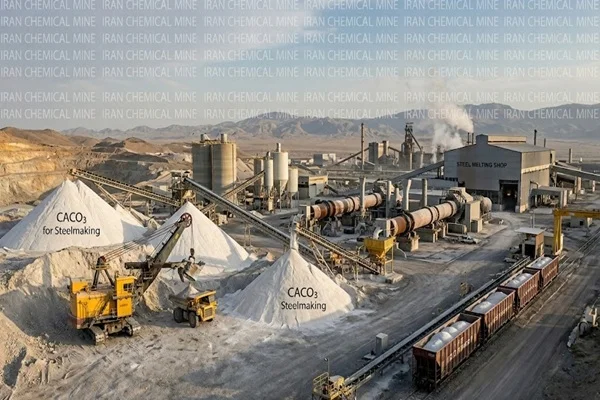
Calcium Carbonate (CaCO3) critical role in Steel Melting and Making Processes
In modern metallurgy, the efficiency of steel manufacturing relies heavily on the quality and chemical precision of non-metallic mineral fluxes. Among these, Calcium Carbonate (CaCO3) stands as an indispensable raw material. Primarily serving as a slag-forming agent and a refining purifier, CaCO3 plays a key role in removing impurities, protecting furnace linings, and determining the structural integrity of the final steel product.
As a premier global producer and exporter, Iran Chemical Mine provides top-tier CaCO3 tailored specifically to meet the strict demands of international steel mills and foundries.
Nomenclature: Other Names for Calcium Carbonate in Metallurgy
While known scientifically as Calcium Carbonate or by its chemical formula CaCO3, this mineral is recognized by several industrial and commercial names within the mining and metallurgical sectors:
- Limestone: The natural sedimentary rock composed primarily of CaCO3.
- Calcite: The crystalline, highly pure polymorph of calcium carbonate.
- Whiting: A term often used for finely ground, high-purity calcium carbonate powders.
- Fluxstone: A functional industrial name indicating its role as a metallurgical melting flux.
Performance and Chemical Mechanism of CaCO3 in Steel Furnaces
The performance of Calcium Carbonate in steel melting—whether in a Blast Furnace (BF), Basic Oxygen Furnace (BOF), or Electric Arc Furnace (EAF)—revolves around its thermal decomposition and high chemical reactivity.
1. Thermal Decomposition (Calcination)
When injected or charged into a high-temperature steel furnace (exceeding 900°C), CaCO3 undergoes an endothermic calcination reaction, breaking down into Calcium Oxide (Quicklime) and Carbon Dioxide gas:
CaCO3 —— CaO + CO2
The newly formed, highly reactive Calcium Oxide (CaO) serves as the active agent that binds with unwanted acidic impurities in the molten iron.
2. Slag Formation and Gangue Removal
Iron ore naturally contains impurities known as gangue, consisting primarily of Silicon Dioxide (SiO2) and Aluminum Oxide (Al2O3). Left unchecked, these minerals ruin the purity and strength of steel. The CaO derived from calcium carbonate reacts with these oxides to form a liquid byproduct called slag:
CaO + SiO2 ———- CaSiO3 (Liquid Slag)
Because this slag is less dense than liquid steel, it floats safely to the surface of the melt (The University of California, Berkeley Team Students, 2015). This creates a protective blanket that shields the underlying molten iron from environmental re-oxidation and excessive heat loss.
   +---------------------------------------+
   |        Slag Layer (CaSiO3, etc.)      |  <-- Floats on top, prevents re-oxidation
   +---------------------------------------+
   |                                       |
   |           Molten Steel Bath           |  <-- Purified, low-impurity metal
   |                                       |
   +---------------------------------------+
3. Dephosphorization and Desulfurization
Phosphorus (P) and Sulfur (S) induce brittleness in finished steel. Calcium carbonate acts as an exceptional dephosphorization and desulfurization agent. Under oxidizing conditions, the CaO fixes phosphorus into a stable calcium phosphate compound within the slag phase, preventing it from dissolving back into the metallic iron monomer.
Key Applications of Calcium Carbonate in Steelmaking
CaCO3 is utilized across multiple stages of the steel manufacturing workflow:
- Blast Furnace (BF) Fluxing: Added to lower the melting temperature of the slag, reduce coke consumption, and optimize fluid flow within the furnace.
- Electric Arc Furnace (EAF) Melting: Used during scrap metal recycling to rapidly form an early foaming slag, which protects the furnace’s refractory linings from intense electrical arc radiation.
- Ladles and Secondary Metallurgy: Applied during ladle refining to finely tune the final chemistry of premium and specialized steel grades.
- Sintering and Pelletizing: Mixed directly with iron ore fines to create high-strength fluxed pellets before they enter the blast furnace.
Essential Grain Size Specifications for Steel Production
The particle size distribution of Calcium Carbonate is highly critical; using an incorrect size can lead to material loss, poor reaction kinetics, or structural blockages.
| Steelmaking Application | Recommended Grain Size | Technical Purpose |
| Sintering Plants & Pelletizing | 0 – 3 mm (Fine Powder) | Ensures homogeneous blending and optimal bonding with iron ore concentrates. |
| Electric Arc Furnaces (EAF) | 10 – 40 mm (Lumps) | Prevents the mineral from being prematurely sucked out by the furnace’s exhaust gas ventilation systems. |
| Blast Furnaces (BF) | 20 – 75 mm (Large Coarse) | Maintains proper gas permeability through the tall raw material column inside the furnace. |
Global Export Destinations for Metallurgical CaCO3
As infrastructure developments accelerate worldwide, the demand for highly consistent, low-impurity metallurgical fluxes continues to scale. The primary export regions driving this demand include:
- The Middle East: Rapidly expanding steel hubs in the UAE, Oman, Qatar, and Saudi Arabia require reliable, high-volume supply lines.
- The CIS Region: Russia, Kazakhstan, and Azerbaijan rely heavily on imported premium calcites to fuel their heavy industrial sectors.
- South and East Asia: Major industrial manufacturing centers in India, China, and Bangladesh represent massive consumer markets for high-purity limestone.
- Europe: Countries such as Turkey and various EU nations seek out cost-effective, high-grade mineral compounds to lower their localized manufacturing footprints.
Partner with Iran Chemical Mine: Your Premier Supplier & Exporter
Achieving maximum efficiency in steel melting requires raw materials with exceptionally high calcium purity and low trace impurities (such as iron oxide, moisture, and silica).
Iran Chemical Mine stands as a global leader in the mining, processing, and exporting of high-grade Calcium Carbonate (CaCO3). Leveraging extensive mineral reserves, state-of-the-art crushing plants, and structured logistical networks, we reliably supply custom-tailored grain sizes perfectly aligned with your specific mill configurations.
Whether your plant requires fine whiting powders for pelletizing or large, high-purity calcite lumps for blast furnaces, Iran Chemical Mine guarantees uncompromised quality, competitive international pricing, and smooth export operations to any destination worldwide.
Contact our technical sales team today to request a quote, review chemical certificate of analysis (CoA) datasheets, or secure your next high-volume industrial shipment.